Showing posts with label TH: Protest. Show all posts

Friday

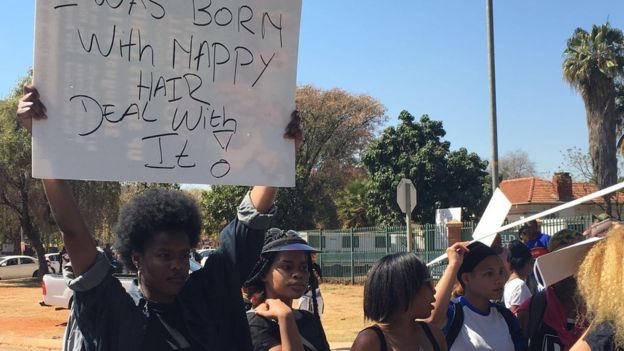
Hair Rules - example in Jamaican and in English school


In every culture and society, some things you are socially and culturally allowed to do with your hair, and other things you are not. These rules are not always explicit, but in workplaces and schools they are sometimes part of the internal regulations.

Here the link (click) to an article from the Jamaican writer Kei Miller's blog, about a controversy in a Jamaican school (2016), explaining why, in the particular context of Jamaica, it is more that just a haircut we are talking about: Yes, this is about slavery and its long legacy. It is about a full emancipation that has been so desperately long in coming. 
Read also Corey Hairstory (click)  about natural hair at school and the difference of reception between a Jamaican school and New York one.

In 2018, a court decision in Jamaica clears the way for dreadlocked child to start school (links here).
(Photo from Kei Miller's blog)
And here the link (click) to an article about haircuts that are not allowed in different schools in England (2017 - with a remember of olds days:
Aged 17, David Bowie campaigned for long-haired boys rights in his Brixton Schoolboy (photo Getty)


Saturday

Hair Protest


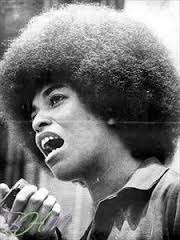
Hair can be used as means to protest against the established order. Whatever the place or the moment in history, the established order is always very clear on what is the "hair norm", which hair styles are acceptable and which ones are not. Hair is the easiest part of the body to modify (without changes having to be irreversible): an obvious, visible and clear way to protest against reigning order.
This French documentary highlights different protests, from the 20th century until now.


By the 1950s, rockers set the tone with their lubricated bananas, which, combined with a proletarian look, shocked a conformist and materialist America. In the sixties appear the long hair of the hippies and the proud afros of the black community. This time, it is a question of freeing itself from racist diktats and of claiming a desire for freedom and peace during the war of Vietnam. Then punks, skinheads and rastas let the reigns run free, with their mohawks, baldheads and dreadlocks respectively. An all-round capillary provocation that prefigures the great blend of today's hairstyles: XXL banana and peroxidised crests spread from one end of the world to the other and are worn without any particular claims. But hair can still regain its subversive power outside Western countries, or through recent movements like afropunk.

#Protest
#Documentary

Monday

Women on U.S.-Mexico border weave their hair together in giant solidarity braid as Trump gets inaugurated


photo by Sasha von Oldershausen

"We wanted something that referenced women directly, but that also sends a message about our common heritage and common backgrounds in a broader context,” Nicholson said. “It’s a symbol of collective strength.”
For many women, hair is a deeply symbolic and intimate extension of our being. From the moment our hair is long enough, it gets braided—by our mothers, grandmothers, and friends. It is part of a physical and figurative bond among women. The braid itself, made up of equal parts that weave into one another like arms in an embrace, constitutes something greater than the sum of its parts.
(...)
“It really marks this idea that, yes, we have our differences, but here are our similarities. And we’re binding those similarities in an act of solidarity.”

#Politics #Symbolism #Femininity #Strength #Common #Protest
#Braid
#Press

#US

Wednesday

Hair Story from V.: a girl must have long hair

At the age of 12, I had long hair. I asked my mom, who was also the family hairdresser, to cut it short. When my dad came home, he was not happy at all: a girl must have long hair ... 

V, 40', female, Belgium

#Gender #Protest

Tuesday

Hair Story from Mau Mau: It is my spiritual antenna

My locks began to grow to show my courage, help me to take the stand I want to take, it is my identity of resistance from many stereotype that women/female is place in. After 2 decade we now have a relationship. I love my locks, we come this far it is my spiritual antenna.

Mau Mau C, 100+, Mother, Africa New
#Gender #Spirituality #Resistance
#Dreadlocks